The commons are the cultural and natural resources accessible to all members of a society, including natural materials such as air, water, and a habitable Earth.
Where communities shape spaces—and shape the future—together.
The Beautiful Earth Commons is my work with communities to co-create spaces that reflect their needs, values, and dreams. Participatory design is about building structures— but it is grounded in building relationships, trust, and a shared sense of ownership. Together, we design spaces that are sustainable, functional, and deeply connected to the people who use them. Whether it’s a community garden, a cultural centre, a public gathering place, or a rural initiative, the process is as important as the outcome.
I believe the environments we share should be shaped democratically, transparently, and from the ground up. This work is about more than design—it’s about empowerment, collective vision, and creating a legacy that reflects the heart of a community.
How We Work
This is my collective facilitation practice, where I design and lead participatory design and community engagement sessions for local networks, rural initiatives, or public groups across Ireland. If you’re looking to build a shared vision before reaching out to county councils or large commercial builders, I’m here to help.
When communities lead the design of their own spaces, the results are transformative—not just for the people who use them, but for the land they’re built on. From reducing environmental impact to fostering social cohesion, co-designed spaces become more than buildings; they become living testaments to what’s possible when people come together.
Through a process of creative collaboration I guide groups, using arts-based methods, collective brainstorming, and deep listening to bridge the gap between dreams and reality.
I champion democratic eco-design, ensuring the process of shaping shared public spaces belongs to the people who will inhabit them. My background in sustainable architecture and Design for Disassembly informs how we approach materials, durability, and adaptability, while my research into eco-villages across Europe adds a broader perspective on what’s possible when communities lead the way.
You’ll leave with a co-created, community-backed spatial strategy and low-impact design framework. This empowers your group with a clear vision to present to funders or local authorities, making sustainable, shared spaces accessible to everyone.

Some of my community Co-Design practice
Sketches, projects, and moments from my work with communities—spaces that are collaborative, sustainable, and deeply rooted in the earth. Each piece is a testament to the power of co-creation, participatory design, and the beauty of shared resources.
Common Ground CoHousing
Wicklow, Ireland
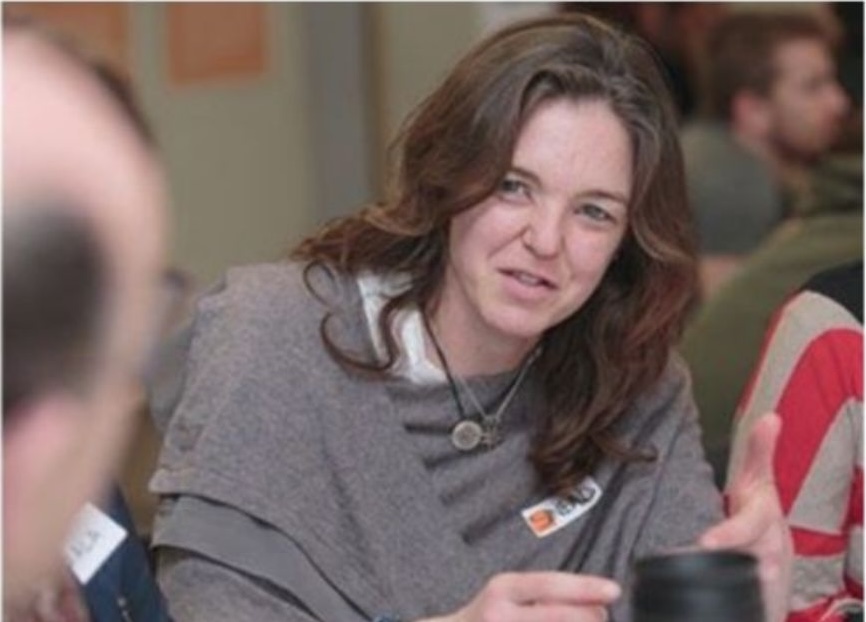
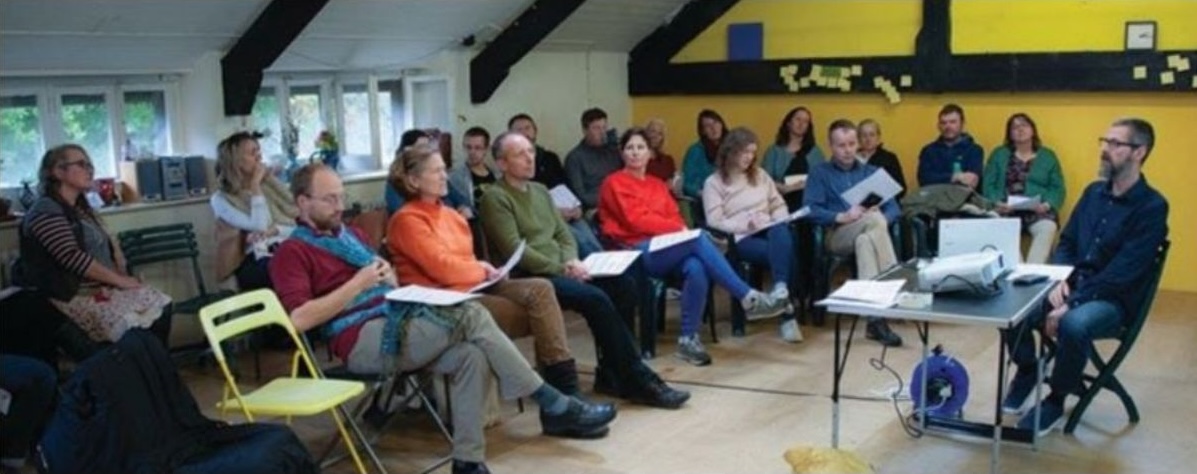
From 2018 to 2020, I was a member of Common Ground CoHousing in Wicklow, a project rooted in low-impact living, affordability, and community governance. Inspired by the LILAC model in Leeds, we set up a Community Land Trust (CLT) using a Mutual Home Ownership Society (MHOS) model and Sociocracy for governance. My role in the Design Circle was to facilitate workshops that allowed us to co-create our brief, discuss typologies, lifestyles, and dream together.
I designed and facilitated participatory workshops, guiding the community through “dreaming” and “backcasting” exercises. This allowed us to clarify our wants and needs, map out shared spaces, and consider our long-term lifestyle requirements together. The result? A spatial strategy that emerged from playful, inclusive conversations—proof that community-led design can balance big ideas with real-world practicality.


Eco-Village Explorations
Global (2016–2018)
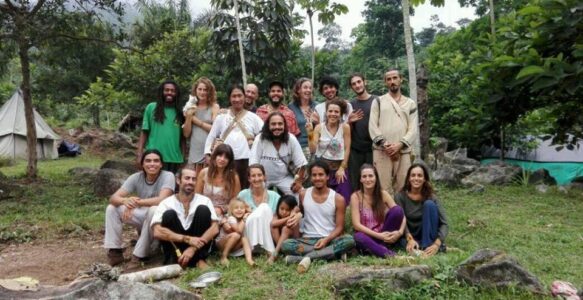
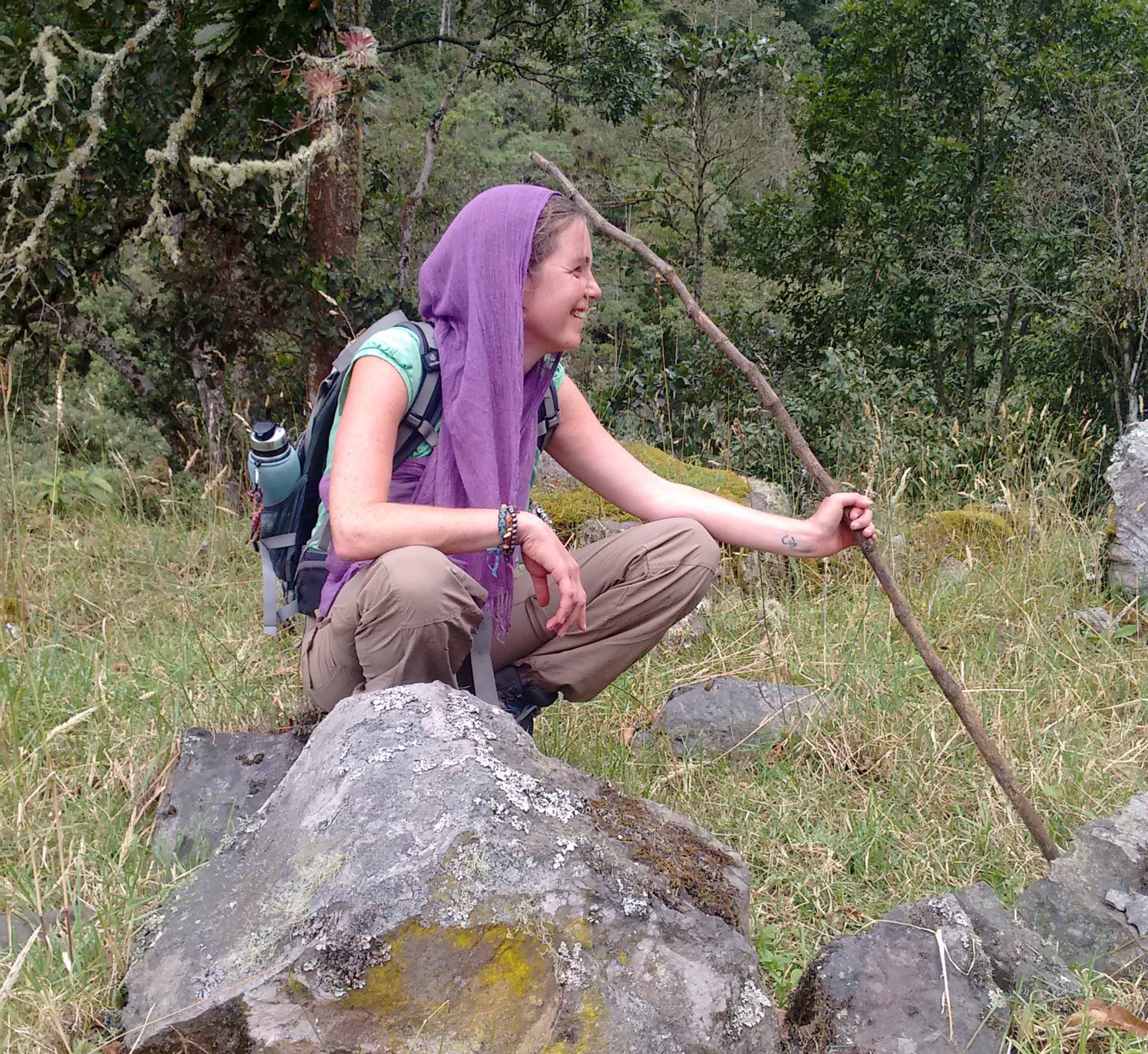
A two-year immersion across European and South American intentional communities, mapping out low-impact housing layouts and permaculture systems. This research grew from a crowdfunded project where I stayed in and studied 20 international intentional communities, exploring how daily habits, spatial layouts, and community governance work together.
I led hands-on field research, observing how people interact with public and community spaces. On Findhorn Beach in Scotland, I worked with locals to create simple stone lines and circles, noticing how people engaged with them. These observations became the foundation for workshops with international volunteers, where we:
- Prototyped a tiny house ecovillage layout.
- Created a “Ghost House” design installation in Sweden.
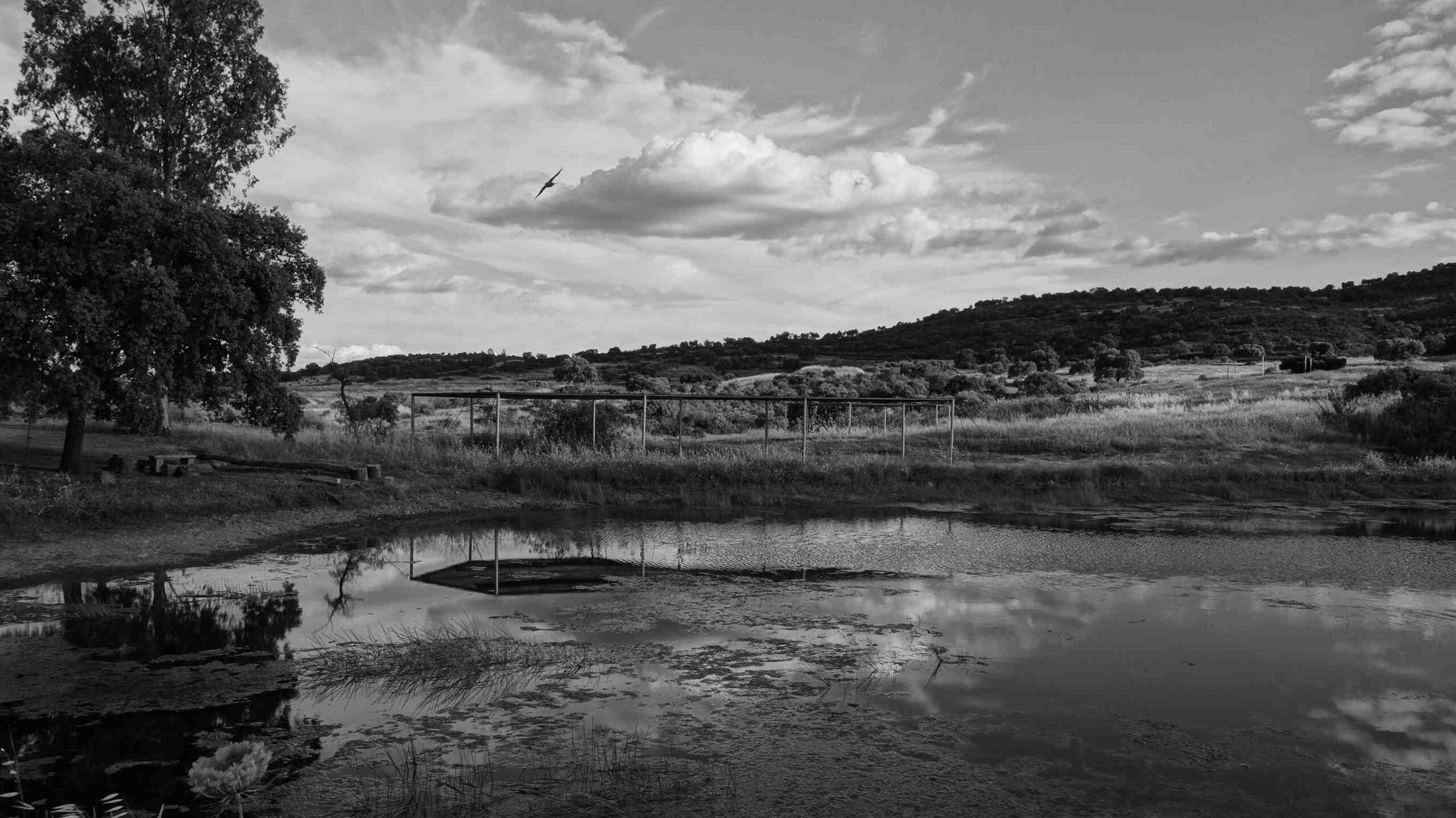
- Built temporary, modular shade structures in Spain.
- Created interactive land art
This work taught me how small, thoughtful interventions can transform shared spaces—and how simple, playful tools can bridge cultures and generations.





Cloughjordan Residency
Cloughjordan Eco-Village, Ireland (2023)
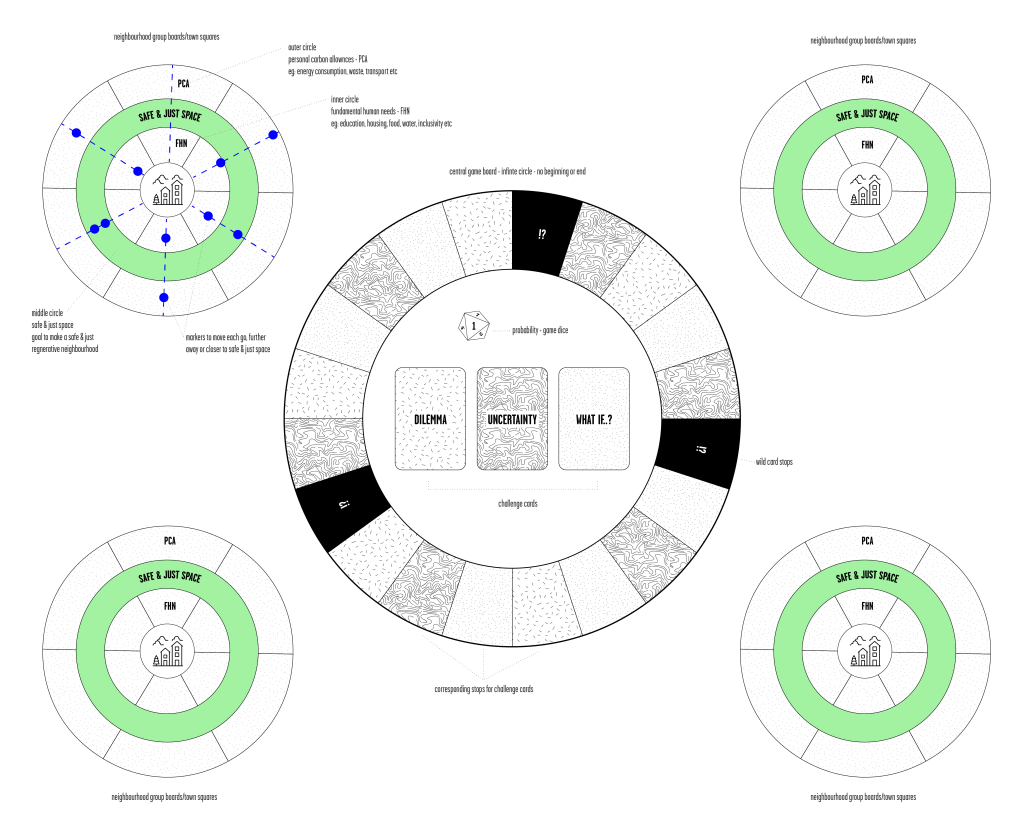
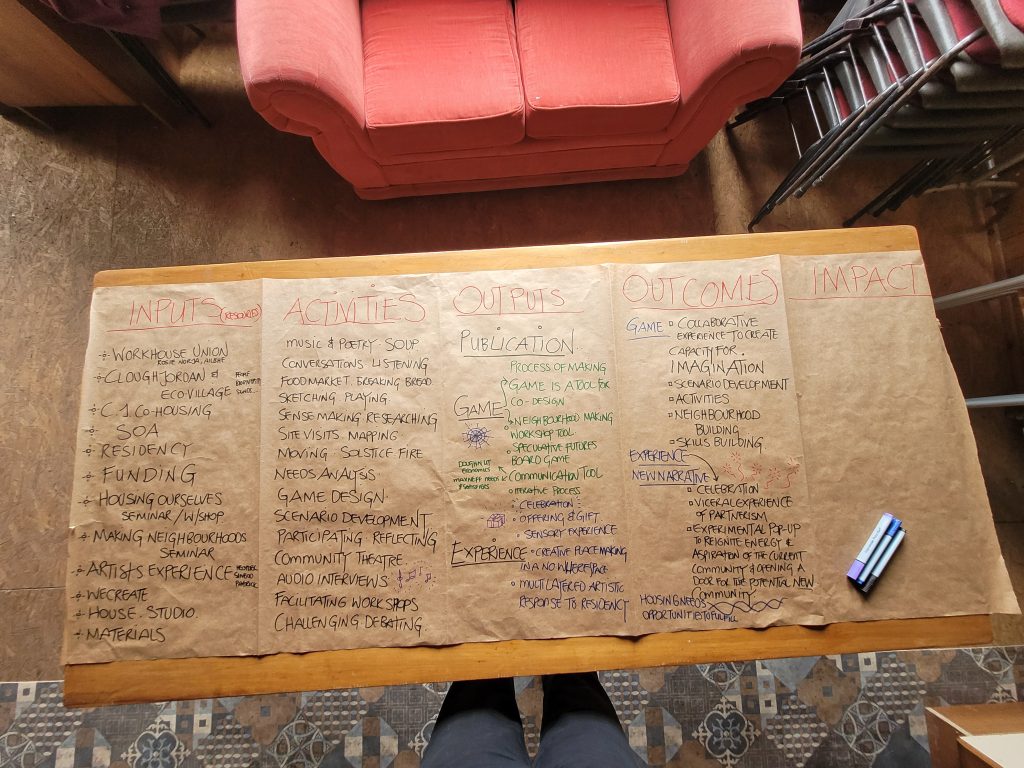
During the Making Neighbourhoods residency, I explored how playful design tools can activate community connections and spatial relationships. Alongside two other artists, I co-created an interactive community game that naturally bridged generational divides. This allowed schoolchildren and older residents to explore neighbourhood layouts together in a playful, relaxed way—proving that design can be a bridge, not just a blueprint.
Bring Co-Design to Your Community
Ready to explore what’s possible for your community space?